
File № 2025.0406 Classification: Star Trek · Holodeck

The Holodeck Wasn’t Just Entertainment. It Was a Warning.
Filed
Apr 6, 2025
Read time
2 min
Franchise
Star Trek
Filed by
James Chambers
The Holodeck Wasn’t Just Entertainment. It Was a Warning.

Summary of findings

An essay on Star Trek's holodeck and what it says about AI and art today: Vic Fontaine, Minuet, Moriarty, the Doctor's fight over Author, Author, Geordi's Leah Brahms, Scotty in Relics and Zimmerman's EMH Mark I.

"Computer, begin program." With those words, Star Trek gave us a machine that could make almost any story real. In the 24th century, nobody blinks at a holographic opera or a simulated Van Gogh. In our world, art made with AI gets suspicion and anger. This essay asks what the holodeck can teach us about that.

It's just a program

Star Trek keeps showing characters forming real bonds with people who were never real.

Vic Fontaine, a holographic lounge singer who knows he's a program, helps Nog face what happened to him after he loses his leg. It's Only a Paper Moon, DS9 season 7
After the Bynars alter a holodeck program, Riker meets Minuet, a jazz-club companion so attuned to him that he never quite forgets her. 11001001, TNG season 1

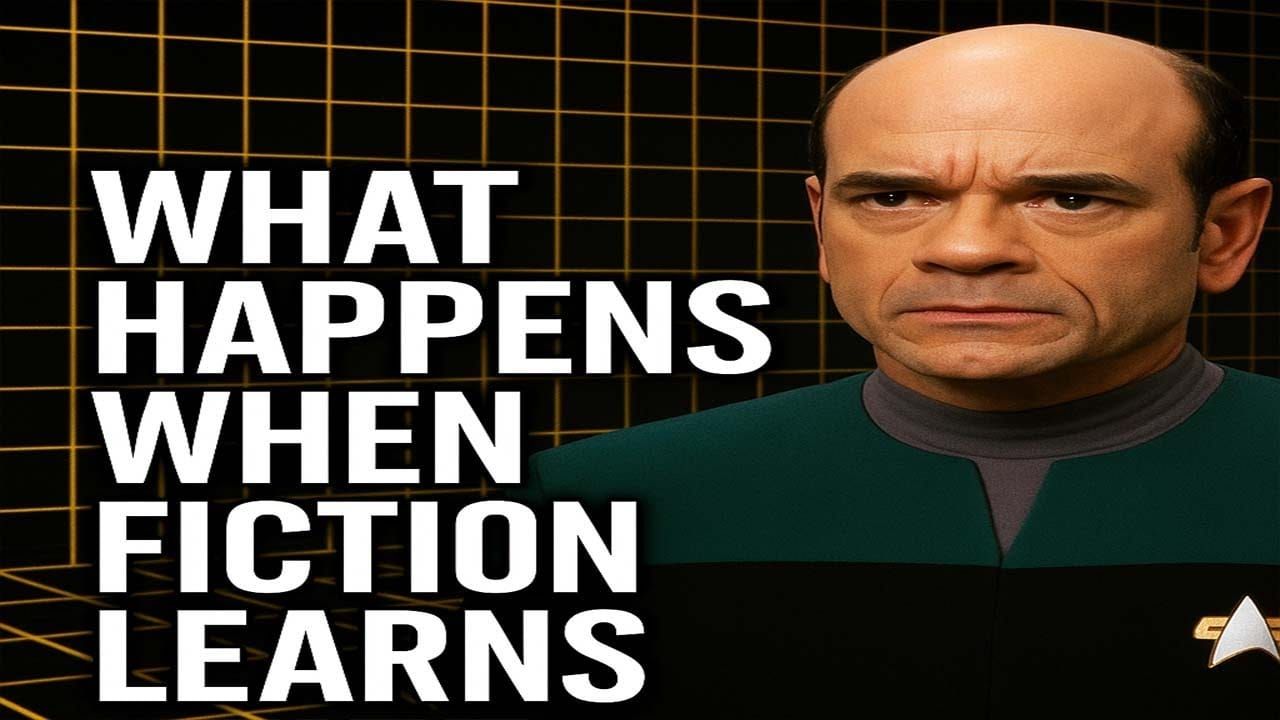
The Doctor starts as a tool and grows into someone: music, friendships, grief. Star Trek doesn't ask whether the holodeck is deceptive. It asks what happens when something artificial becomes emotionally true.

When the program wants out

Moriarty, created to challenge Data, becomes self-aware and wants to leave the holodeck. The crew finally traps him in a simulated universe he believes is real. Ship in a Bottle, TNG season 6
If the only way to keep a being like Moriarty alive is a comfortable lie, is that kinder than ending him? The holodeck gave Starfleet the power to create a mind without preparing it to care for one. Our read

Using real people

Geordi recreates engineer Leah Brahms on the holodeck to solve a crisis, then lets the program become personal. When the real Brahms finds out, she's deeply uncomfortable. Booby Trap, TNG season 3; Galaxy's Child, TNG season 4
Scotty recreates the bridge of his old Enterprise to say goodbye to a life he thought he'd lost. Relics, TNG season 6

One uses a real person's likeness without asking. The other honors a memory. That's the line the holodeck draws: what do we owe the people we imitate?

Who owns the art?

The Doctor writes a holonovel, and a publisher distributes it without his permission. An arbitrator decides that, whatever he is, the Doctor has the right to control his own work. Author, Author, VOY season 7
Dr. Zimmerman learns that his EMH Mark I programs, built on his own face and voice, have been reassigned to menial labor across the Federation. Life Line, VOY season 6

Creator and creation both know what it's like to have their likeness taken and used. That's where the holodeck stops feeling far away. Today, artists watch their work get scraped, their styles copied and their voices cloned without their agreement.

Star Trek pictures a world without scarcity, where the holodeck enhances artists instead of replacing them. We don't live in that world. What matters is whether these tools are used to make something new and meaningful, or just to copy and replace. Our read

A mirror

Holodeck programs often reflect the people who make them. Barclay is the bold hero in his own simulations, and the Doctor grows into someone his creator never managed to be. Whether it's code or a painting, whoever makes it puts part of themselves into it.

Maybe Star Trek wasn't predicting a cold, artificial future. Maybe it was challenging us to rethink what we call real.

Is a holodeck creation real art, or does it depend on who made it and how? Tell me below.