
How the Jedi and Starfleet Lost Their Way
Summary of findings
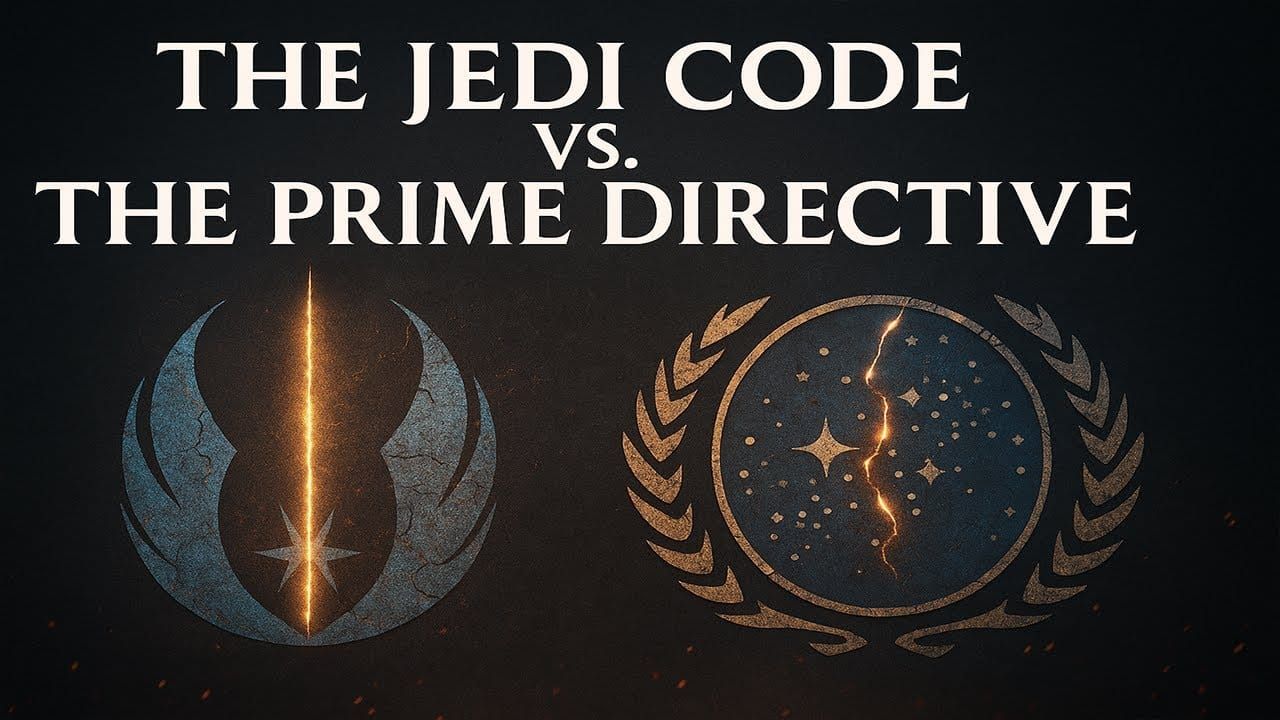
How the Jedi Code and Starfleet's Prime Directive failed the people who followed them. Qui-Gon Jinn, Obi-Wan Kenobi, Ahsoka Tano and Anakin Skywalker beside Kirk, Sisko, Eddington and Section 31, with Homeward, Pen Pals and Insurrection.
Two codes, two franchises, one problem. The Jedi Code and the Prime Directive were both written to keep powerful people from doing harm. This file asks what happens when following the rule matters more than the people it was meant to protect.
Born from trauma
The file starts with where each code came from, and neither came from a calm place. The Jedi rebuilt themselves after war and decided emotion was the danger: fear leads to anger, anger to hate, hate to suffering. Starfleet's rule grew out of first contacts that went wrong, worlds handed more than they could carry. Read that way, the Prime Directive is less a guide and more an apology written into law.
When the code says wait
On the Jedi side, the clearest case is Ahsoka Tano. Framed for a bombing, she was doubted by the Council, stripped of her rank and handed to a military court while Anakin told them they had it wrong. When the truth came out, they offered her a way back, and she turned it down.
Starfleet has its own versions. In Homeward, Picard is ready to let a whole civilization die rather than break the directive. In Pen Pals, a child is calling for help and the senior staff hold a debate about whether answering is even allowed. Starfleet calls it non-interference and the Jedi call it detachment, and to the people on the other end it looks about the same.
The ones who bent the rules
Every code has people who push against it, and the file argues they did the most good. Qui-Gon Jinn was ready to train Anakin without the Council's blessing and died before it came to a fight. Obi-Wan, the by-the-book Jedi, formed the attachments the code forbids and still couldn't save his friend. Ahsoka spared Rex when the clones turned. On the Trek side, Kirk bent the Prime Directive more times than anyone can count, and Sisko used lies and spies to win the Dominion War.
The institution breaks its own rules
The sharpest point in the file is the double standard. Starfleet keeps Section 31 around, an outfit that breaks the Prime Directive as a matter of routine. The Jedi broke their own code to lead clone armies for the Senate. When one person bends the rule to save lives, they're punished. When the institution does it, it gets called necessary. Insurrection is the Trek example, with Starfleet signing off on moving the Ba'ku off their world because it's convenient.
Traitors who believed in something
Not everyone who breaks a code is a hero, and the file doesn't pretend they are. Count Dooku saw the rot in the Republic and became part of it. Michael Eddington turned on Starfleet over the border colonies he believed the Federation had abandoned. Both were wrong, but both still believed in something, and that's the file's point.
Codes don't protect people. People do. That's where the file lands, and it's fair to ask whether either franchise ever really learned it.
Who was right to break the code: Qui-Gon, Ahsoka, Kirk or Sisko? Tell me below.